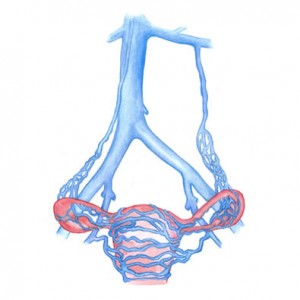
 The diagnosis of Pelvic Congestion Syndrome is best confirmed using pelvic venography performed in the hospital. A pelvic ultrasound or other imaging study is performed prior to the venogram to rule out any anatomical abnormalities. A venogram is performed on an outpatient basis, and takes about two and a half hours from the time the procedure is started to the time you will leave the hospital. The procedure consists of inserting a thin plastic, flexible catheter about the size of a strand of spaghetti into the jugular vein in the neck. Dye is then injected into the veins of the pelvis and x-rays are taken. With the injection of dye, the interventionalist can visualize the abnormal reflux in pelvic varicosities. PCS is treated by placing tiny coils into the faulty veins to seal them off and relieve the aching pressure. The catheter is then removed and a small dressing is applied. After treatment, patients can often return to normal activity immediately.
Embolization is much less invasive than surgery. It also offers a proven, safe and minimally invasive treatment option to the traditional surgery such as hysterectomy. Although pelvic venogram is a viable treatment, other options do exist for treatment of pelvic congestion syndrome. Birth control pills or hormones may be used to stop menstrual cycles which may be beneficial in decreasing symptoms. Analgesics may be used to decrease pain. Surgical treatment is also available which includes a hysterectomy and tying off or removing the varicose veins.
Pelvic venogram offers a less expensive and less invasive effective treatment for pelvic congestion syndrome when compared to surgical treatment. Approximately 75 percent of women experience an improvement in their symptoms after the procedure. Although women’s symptoms usually improve, additional treatments may be necessary because veins in the groin or legs are still dilated and bulging.
If you are interested in this treatment or have questions, please call 801.379.6700 or send us a message.