string(2) "en"
b181ec719898da176d9eac25c789c5ce
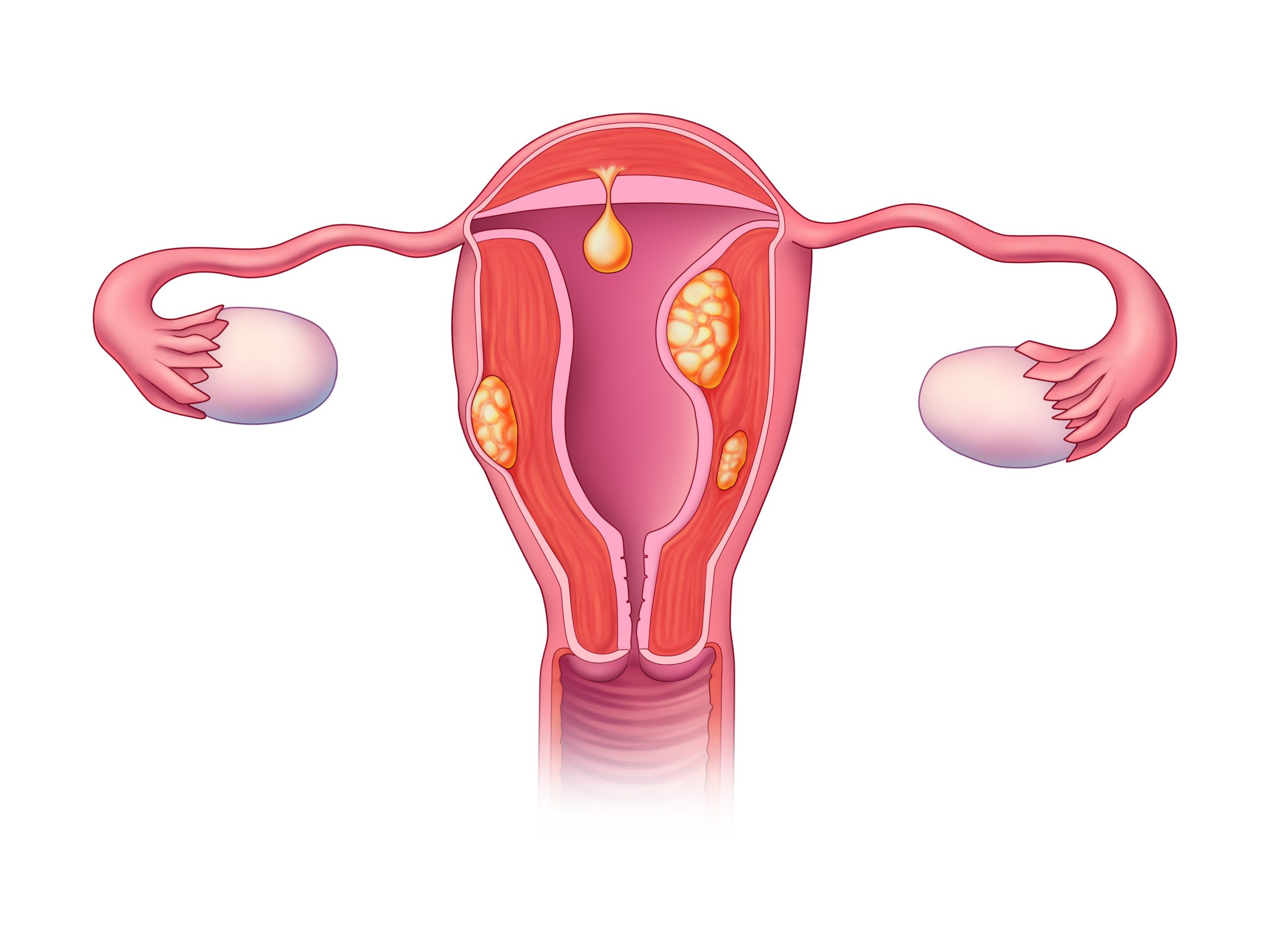
Uterine Fibroids (Leiomyoma)
Uterine fibroids are benign tumors that originate from the uterine muscle tissue. Fibroid growth is dependent on estrogen and progesterone and is rare before puberty. Fibroid growth increases in prevalence during the reproductive years and often decreases in size after menopause. Uterine fibroids can alter a woman’s period and cause a variety of bulk pelvic symptoms.
Fibroids are found in approximately 70 percent of white women and in about 80 percent of African American women in the United States by the time they are 50 years old. Fibroids are benign and do not spread to other regions of the body. The risk of malignancy for uterine fibroids is very low.
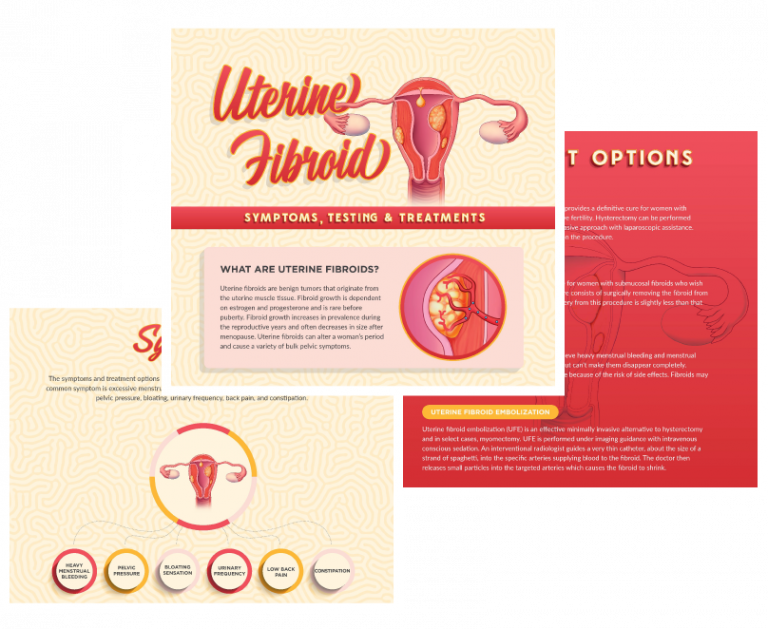
Download our illustrated guide to the diagnosis and treatment of uterine fibroids.
View and Download the Infographic

Symptoms
The symptoms and treatment options depend on the size, number, and location of the tumors. The most common symptom is excessive menstrual bleeding. Fibroids often also cause bulk symptoms which include pelvic pressure, bloating sensation, urinary frequency and urgency, low back pain, and constipation.
- Heavy menstrual bleeding
- Pelvic pressure
- Bloating sensation
- Urinary frequency and urgency
- Low back pain
- Constipation

Testing for Uterine Fibroids
It is important to differentiate between other possible causes of uterine growth and abnormal bleeding. A correct diagnosis will determine the proper treatment for you. Other causes of uterine growth and abnormal menstrual bleeding include:
- Adenomyosis
- Endometrial polyps
- Uterine malignancy
Because most women will not exhibit every potential symptom, the diagnosis is usually confirmed by using imaging of the pelvis, with transvaginal ultrasound or MRI.
Ultrasound
Ultrasound uses sound waves to get a picture of your uterus to confirm the diagnosis. The technician places the ultrasound device (transducer) over your abdomen (transabdominal) or in some cases inside the vaginal canal (transvaginal) to get images of your uterus.
MRI
Magnetic resonance imaging, or MRI, is a non-invasive test that uses a powerful magnet to view size and location of fibroids, exclude other types of tumors, and help to determine appropriate treatment options. The MRI requires the administration of an intravenous contrast agent, and requires the patient to lay flat and very still for about 45 min to complete the exam.
Treatment of Uterine Fibroids
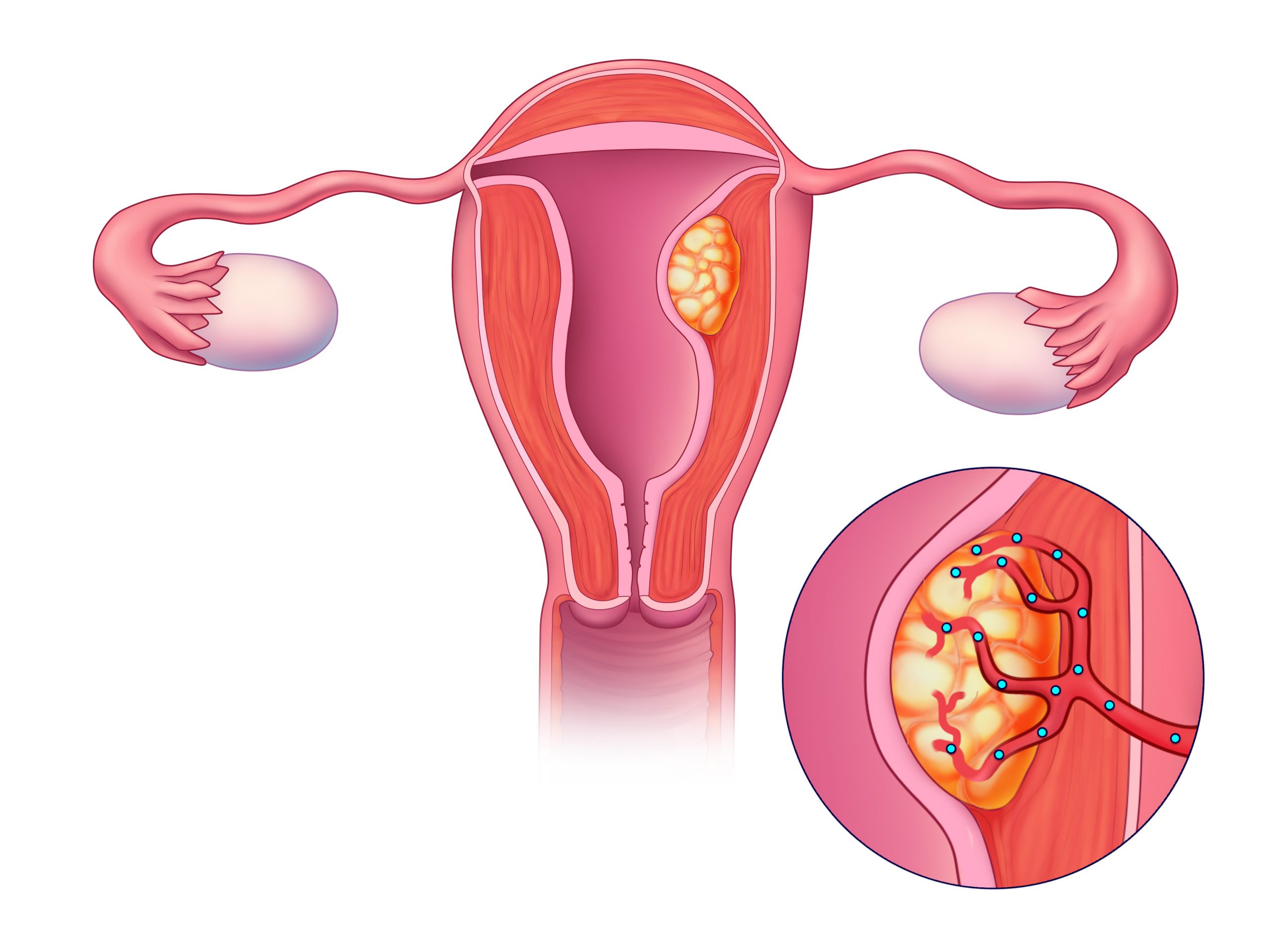
Uterine Fibroid Embolization
Uterine fibroid embolization, or UFE, targets the abnormal fibroid blood supply which causes the fibroid to shrink. UFE avoids surgery, can preserve your uterus, control symptoms, and improves quality of life. Approximately 9 out of 10 women who undergo uterine fibroid embolization will experience significant symptomatic improvement.
Under X-ray guidance and sedation, an interventional radiologist guides a very thin catheter, about the size of a strand of spaghetti, into the specific arteries supplying blood to the fibroid. Once the catheter is in the proper position, the doctor releases small particles into the targeted arteries which causes the fibroid to shrink. When the embolization is completed, the catheter is removed.
In order to minimize discomfort, patients are given medication before, during and after the procedure to reduce inflammation and help alleviate procedure-related pain. Patients can typically resume most normal daily activities within 24 hours following embolization.
Following UFE, some women may experience discomfort relating to post-embolization syndrome, including pelvic pain, cramping, nausea, low-grade fever, fatigue and discomfort. These symptoms generally resolve within 2-7 days.
Depending on the location and size of the fibroid some women may also have some vaginal discharge for 1-2 weeks after the procedure. This occurs because the tissue of the fibroid is dying and may slough off into the endometrial cavity.
Related Content




IVC® is accredited by ACR and IAC

®2026 IVC All Rights Reserved.