Pelvic Congestion Syndrome is a condition where there are varicose veins in the lower abdomen and pelvis. Many women are affected by this condition, but may not know that their pelvic pain, heaviness and pressure are caused by varicose veins.
Symptoms
Symptoms of Pelvic Congestion Syndrome (PCS) are: heavy, achy, (anywhere from a dull ache to significant achiness), and/or pressure in the pelvis, pelvic pain that gets worse during a woman’s cycle, leg pain that accompanies the pelvic pain, back pain, and pain after intercourse.
Diagnosis
In our office, a Nurse Practitioner, Physician’s Assistant, or Physician will discuss pelvic symptoms with you. They will determine whether you present with pelvic congestion syndrome symptoms and order an ultrasound to look for varicose veins in the pelvis, labial area and upper thigh. This gives information regarding the sizes of the varicose veins in the pelvis and whether they have propagated to other parts of the body. Once these veins are found, they will also order a CT scan to show the origin of the varicose veins.
Treatment
For treatment of pelvic varices, the doctor will perform a pelvic venogram.
Embolization of a vein: After using an anesthetic to numb a small area of the neck, doctors make a small incision there. Then, they insert a thin, flexible tube (catheter) through the incision into a vein and thread it to the varicose veins. They insert tiny coils, into the vein to block the flow of blood into these varicose veins.
Sclerotherapy: Occasionally, due to the size or position of the veins, the doctor may need to inject the veins with a chemical to close the varicose veins along with the embolization.
Follow Up
We always follow-up with the patient approximately one month post venogram to see if some you the patient’s symptoms have resolved. It may take 1-2 menstrual cycles before significant relief is noticed. Most women we have seen in the office for their post venogram follow-up have described some cramping for the first few days post procedure, and with significant relief in the weeks and months after.
Read More: Pelvic Congestion Syndrome
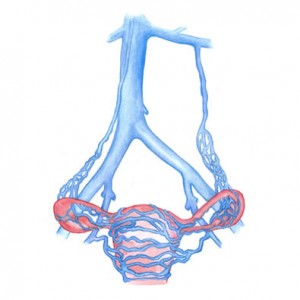 The diagnosis of Pelvic Congestion Syndrome is best confirmed using pelvic venography performed in the hospital. A pelvic ultrasound or other imaging study is performed prior to the venogram to rule out any anatomical abnormalities. A venogram is performed on an outpatient basis, and takes about two and a half hours from the time the procedure is started to the time you will leave the hospital. The procedure consists of inserting a thin plastic, flexible catheter about the size of a strand of spaghetti into the jugular vein in the neck. Dye is then injected into the veins of the pelvis and x-rays are taken. With the injection of dye, the interventionalist can visualize the abnormal reflux in pelvic varicosities. PCS is treated by placing tiny coils into the faulty veins to seal them off and relieve the aching pressure. The catheter is then removed and a small dressing is applied. After treatment, patients can often return to normal activity immediately.