string(2) "en"
325696a7c059e86bf466b02d96d10eb8
Jump to Section:
Pelvic Venous Insufficiency
What is Pelvic Venous Insufficiency?
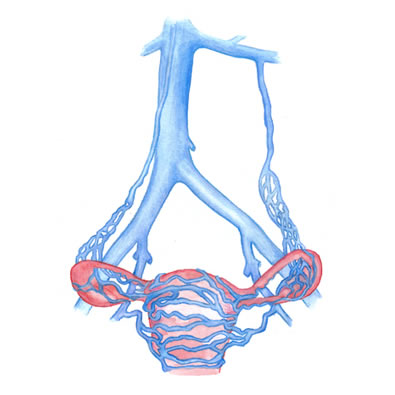
Pelvic Congestion Syndrome, also called Pelvic Venous Congestion, is a cause of chronic pelvic pain due to abnormally dilated varicose veins in the pelvis. Varicose pelvic veins develop when the valves in veins are not working correctly, causing blood to pool and pelvic vein distension. In some cases, pelvic venous congestion may also be due to obstructed blood flow from the pelvis. Similar to varicose veins in the legs, dilated or congested veins within the pelvis create pressure in the pelvis, vagina and pelvic floor.
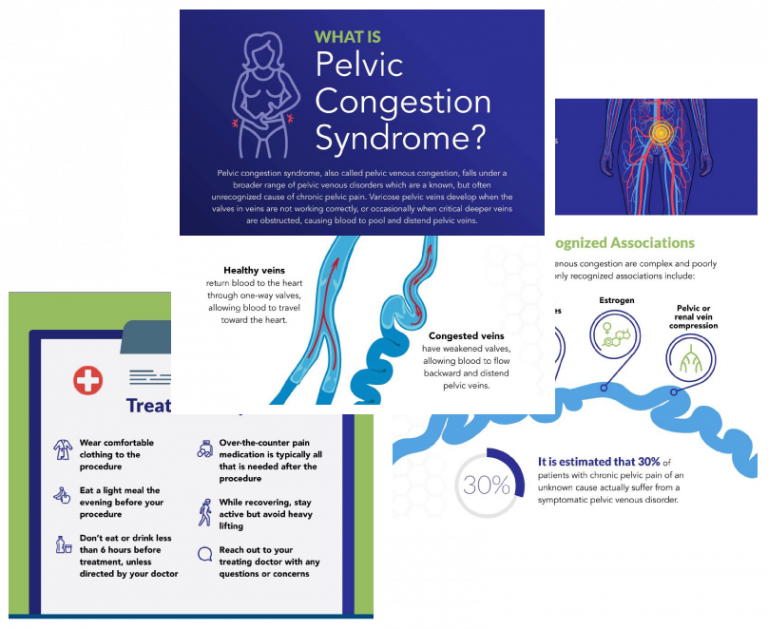
Download our illustrated guide to the diagnosis and treatment of pelvic congestion syndrome.
View and Download the Infographic

Symptoms
It is estimated that up to 30% of patients with chronic pelvic pain of an unknown cause actually suffer from symptomatic pelvic venous congestion. So how do you know if you have Pelvic Congestion Syndrome? Classic symptoms and signs of pelvic congestion include:
- Dull achiness and heaviness in the pelvis, often made worse by prolonged standing
- Pain in the lower back
- Visible varicose veins on the buttocks, vulva, and upper thighs
- Painful menstrual cycles with referred pain in the legs
- Increased frequency of urination
- Pain during and after intercourse

Causes and Risk Factors
As with all varicose vein disease, the causes of pelvic venous congestion are varied and complicated. Clinical research has shown the following associations:
- Genetic predisposition
- Multiple pregnancies
- Estrogen
- Polycystic ovaries
- Iliac or renal vein obstruction


Testing for Pelvic Venous Congestion
Since there here are many potential causes of pelvic pain, pelvic venous congestion unfortunately often goes unrecognized. As part of the assessment of patients with chronic pelvic pain, medical professionals may conduct multiple exams and tests such as:
- Pelvic exam
- Laparoscopy
- Pelvic and doppler ultrasound
- CT or MRI scans
- Pelvic venography
Pelvic ultrasound or other imaging studies such as CT are generally performed prior to treatment for pelvic venous congestion in order to exclude other possible pelvic disorders and to assess for anatomical variations which could affect treatment. It is important to note that a normal laparoscopy does not exclude the diagnosis of pelvic venous congestion.
The diagnosis of pelvic venous congestion is confirmed through an outpatient procedure called pelvic venography and treatment is typically carried out at the same time with a procedure called embolization. Embolization is a proven, safe and minimally invasive treatment option through which abnormal veins are closed using a combination of tiny coils and a sclerosing agent. Occasionally, pelvic venous congestion is caused by an obstructed iliac vein in the pelvis. In these cases, a stent may be required to open the abnormal iliac vein in order to restore normal flow out of the pelvis.
Treatment of Pelvic Congestion Syndrome
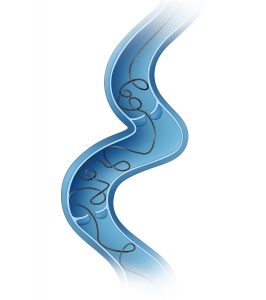
Treatment for pelvic venous congestion is performed in an outpatient setting and patients are discharged shortly after the procedure, typically returning to normal daily activity the same day. Approximately 85 percent of women with pelvic venous congestion will experience a significant improvement in their symptoms after appropriate diagnosis and treatment.
If you are interested in this treatment or have questions, please call 801.379.6700 or complete the form below.