Major Insurance Providers Accepted

Because IVC is privately owned we contract and accept most insurance companies.

See the card above for a list of some of the major insurance providers we work with.

If you do not see your insurance here, that does not mean that we do not accept them. Please feel free to contact us at any time. Our receptions or I will be able to let you know if we are in contract with your insurance.


Finding the right doctor for you…

With more and more doctors dabbling in vein treatments it is important that you do your homework on selecting the right healthcare provider. There are a few easy steps you can take when making this selection:

  • Ask other people who suffer from the same condition as you for advice. Chances are you know someone who has sought treatment for their varicose veins. Friends and family will be able to tell you of their experiences on a more personal, relatable level. Find out which doctors they respect and why.
  • Ask your primary care physician for recommendations and direction. Although primary care physicians are not always fully aware of the treatments available for vein disease, they may have suggestions as to where to start. Varicose vein treatments have come a long ways from ten years ago. It is difficult for physicians to stay up-to-date on all the new developments; therefore, do not be surprised if your primary care physician is not encouraging. You may need to take the lead on creating a two-way conversation with your physician regarding treatment.
  • Research online. The internet is a massive location for information. Many vein specialists can be found through web searches. A word of caution: There are quite of number of doctors attempting to add vein treatments to their practices. Doctors who dabble, or half commit, to vein medicine can do a disservice to their patients. The best place to seek treatment is with a vein specialist who has been treating vein problems on a full-time basis, for at least two years.
  • Ask for a free screening. Most vein specialists offer a free varicose vein screening. Take the opportunity to familiarize yourself with the office and staff. Ask them questions about the disease and treatment options at the time. Test their knowledge. It is important that you feel completely comfortable with the environment and specialists before starting treatment.

Armed with this information, you are well on your way to finding the best practice for you to start your road to treatment of varicose veins.

What are stasis ulcers?

Stasis ulcers are open wounds on the medial or lateral portion of the calf or foot that are at risk of infection. They may take a long time to heal and they may need the assistance of a podiatrist or wound clinic to help them heal. An ulcer is caused by the stasis or pooling of blood in the ankles or feet. This pooling blood causes a breakdown of the skin. Over time the skin becomes very fragile and a small scrape can cause an ulcer to develop. Treating varicose veins can aid in the healing process of active ulcerations.

What are Perforator Veins?

A perforator vein is a small vein that connects the deep and superficial systems together. They are usually short in length and have only a few valves in them. They can have reflux just like other veins in the legs. These small connector veins run horizontally across the leg and not vertically up and down the leg. It is like the horizontal cross on the letter H. These perforators can be the source to visible varicose veins in the calf or thigh.

Varicocele Treatment Options

In the United States, varicocele treatment has traditionally involved open surgery, usually performed by a urologic surgeon, or urologist. In recent years however, a safe and effective non-surgical alternative called varicocele embolization is becoming the treatment of choice for many patients and their physicians

Varicocele embolization is an outpatient procedure that is performed without general anesthesia using light sedation. In this type of varicocele treatment, a small tube is inserted into the neck or groin through a small nick in the skin (about the size of the lead in a pencil). The skin is numbed for this procedure and it is not painful. Next a small catheter, or tube, is painlessly guided up into the abdomen and into the varicocele vein under the guidance of x-ray imaging. A dye is injected to create an x-ray map (venogram) of the vein and tiny metal coils or other embolizing substances are inserted through the catheter to block the flow of blood to the vein. The tube is removed and no stitches are needed. Patients are observed for a few hours and go home the same day. Recovery from varicocele embolization typically takes less than 24 hours and patients often return to work the next day.

Advantages of Varicocele Embolization

The majority of men in the United States undergo surgery as varicocele treatment. This is because they are usually sent to surgeons for evaluation, and many do not know about varicocele embolization. The advantages of this alternative, interventional radiology varicocele treatment include:

* It is as effective as surgery, as measured by improvement in semen analysis and pregnancy rates.

* It does not require any surgical incision in the scrotal area.

* A patient with varicoceles on both sides can have both fixed at the same time through one vein puncture site (surgery requires two separate open incisions).

* General anesthesia is not used for embolization (most surgery is done under general).

* There is a lower rate of complications compared to surgery. Infection has not been reported after embolization.

*It requires less recovery time. Post embolization patients are virtually never admitted to the hospital. Even patients with physically demanding jobs may return to work within the next day or two, unlike post surgical patients.

What Are Varicoceles?

Varicoceles are a relatively common condition (affecting approximately 10 percent of men) that tend to occur in young men, usually during the second or third decade of life. Sometimes these varicoceles cause no symptoms and are harmless, but sometimes a varicocele can cause pain, atrophy (shrinkage), or fertility problems.

Normally blood flows to the testicles through an artery and flows out via a network of tiny veins that drain into a larger vein that travels up through the abdomen. Varicoceles occur when there is a reverse of blood flow. This stretches and enlarges the tiny veins around the testicle to cause a varicocele, a tangled network of blood vessels also known as varicose veins.

One of the signs of a varicocele is an aching pain when the individual has been standing or sitting for an extended time and pressure builds up in the affected veins. Usually (but not always) painful varicoceles are prominent in size. Atrophy, or shrinking, of the testicles is another sign of varicoceles. The condition is often diagnosed in adolescent boys during a sports physical exam. When the affected testicle is smaller than the other, repair of the varicocele is often recommended. The repaired testicle will return to normal size in many cases.

There is an association between varicoceles and infertility or sub-fertility, but it is difficult to be certain if a varicocele is the cause of fertility problems in any one case. Other signs of varicoceles can be a decreased sperm count, decreased motility, or movement of sperm, and an increase in the number of deformed sperm. It is not known for certain how varicoceles contribute to these problems, but a common theory is that the condition raises the temperature of the testicles and affects sperm production.

Typical varicocele symptoms are mild and many do not require treatment. Treatment may be necessary if the varicocele is causing discomfort or any of the other problems listed above.

How is Pelvic Congestion Syndrome Diagnosed and Treated?

Pelvic Congestion Syndrome at Intermountain Vein CenterThe diagnosis of Pelvic Congestion Syndrome is best confirmed using pelvic venography performed in the hospital. A pelvic ultrasound or other imaging study is performed prior to the venogram to rule out any anatomical abnormalities. A venogram is performed on an outpatient basis, and takes about two and a half hours from the time the procedure is started to the time you will leave the hospital. The procedure consists of inserting a thin plastic, flexible catheter about the size of a strand of spaghetti into the jugular vein in the neck. Dye is then injected into the veins of the pelvis and x-rays are taken. With the injection of dye, the interventionalist can visualize the abnormal reflux in pelvic varicosities. PCS is treated by placing tiny coils into the faulty veins to seal them off and relieve the aching pressure. The catheter is then removed and a small dressing is applied. After treatment, patients can often return to normal activity immediately.

Embolization is much less invasive than surgery. It also offers a proven, safe and minimally invasive treatment option to the traditional surgery such as hysterectomy. Although pelvic venogram is a viable treatment, other options do exist for treatment of pelvic congestion syndrome. Birth control pills or hormones may be used to stop menstrual cycles which may be beneficial in decreasing symptoms. Analgesics may be used to decrease pain. Surgical treatment is also available which includes a hysterectomy and tying off or removing the varicose veins.

Pelvic venogram offers a less expensive and less invasive effective treatment for pelvic congestion syndrome when compared to surgical treatment. Approximately 75 percent of women experience an improvement in their symptoms after the procedure. Although women’s symptoms usually improve, additional treatments may be necessary because veins in the groin or legs are still dilated and bulging.

If you are interested in this treatment or have questions, please call 801.379.6700 or send us a message.

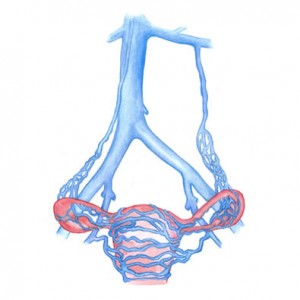
What Is Pelvic Congestion Syndrome?

There are many different causes of pelvic pain, but sometimes it is related to the existence of ovarian and pelvic varicose veins. Varicose veins are a result of valves in the veins that don’t work correctly. Valves are designed to help veins return blood to the heart by preventing back-flow of blood down the vein. When the valves don’t work, this lets the blood pool resulting in vein bulging and pressure.

Studies show that up to 30% of patients with chronic pelvic pain have pelvic congestion syndrome (PCS) as a primary cause of their pelvic pain. The majority of women with PCS are less than 45 and are in their childbearing years. Risk factors for PCS include multiple pregnancies, polycystic ovarian syndrome, hormonal dysfunction and leg varicose veins. Women with PCS usually complain of a dull ache and heaviness in the pelvis that is worsened by standing, pregnancy, and menstruation. Sometimes this pain may be experienced in the lower back. There may also be visible varicose veins in the groin area, buttocks and upper thigh.

What should I address first, my pelvis or my legs?

Often times our female patients have both leg varicose veins and pelvic varicose veins. Although these veins are in different locations both sources can be symptomatic to the patient. The question then becomes “which do I treat first?”


The problematic veins although similar in pathology and symptoms are treated in different methods. The legs are treated as an in office procedure involving the use of EVLA, sclerotherapy, and ambulatory phlebectomy. The pelvic veins are treated with a same-day hospital procedure called a venogram with coil embolization. The goal with both procedures is to close down incompetent veins that cause the symptoms. And while these are very different procedures often both procedures need to be performed to reduce the symptoms. The question of which procedure to do first really comes down to which problem is causing you the most pain.


There is not a 100% right or wrong answer to this question and so mostly it is a judgment call on the patient’s part. There are a few cases where the doctor may have a reason to treat one problem over the other but this is because it will be in the patient’s best interest.

Insurance – it’s the name of the game. Does it mean anything to you?

When it comes to insurance we all have a lot of questions. Do you ever feel that you never get a straight answer? Welcome to the game. For the next few weeks I will be your coach and will provide you with insurance insight that pertains to varicose vein policies. This week I will share general requirements that many of the insurance providers enforce through their guidelines. In the following weeks I will highlight an individual insurance plan.

I’m sure you have questions regarding your deductible and if it will apply to the procedures. You may also wonder what your responsibility will be. All of these questions will be answered during your new patient appointment.

Many insurance companies require conservative measures, such as compression stocking usage. The use of anti-inflammatories and pain meds are required; exercise and being as active as possible is also encouraged. And what about symptoms? Swelling, achiness, PAIN, etc. Ay yi yi. The list goes on and on. I promise I will not leave you hanging. I will address all these things and more in the following weeks and be specific as to which insurances require all or none of these conservative measures and symptoms.

Whether you are playing “Shoots and Ladders” or friendly rounds of fantasy football, all games have rules. I hope to share the rules to the “insurance game” in a way that is easy to understand and help you maneuver through the field of policy madness.